rooftop · Aug 26, 2026
A Rooftop Garden, Step by Step
We turned a flat, empty roof into a working vegetable garden over one spring. Here is the order we did it in, and the two mistakes we'd happily have skipped.
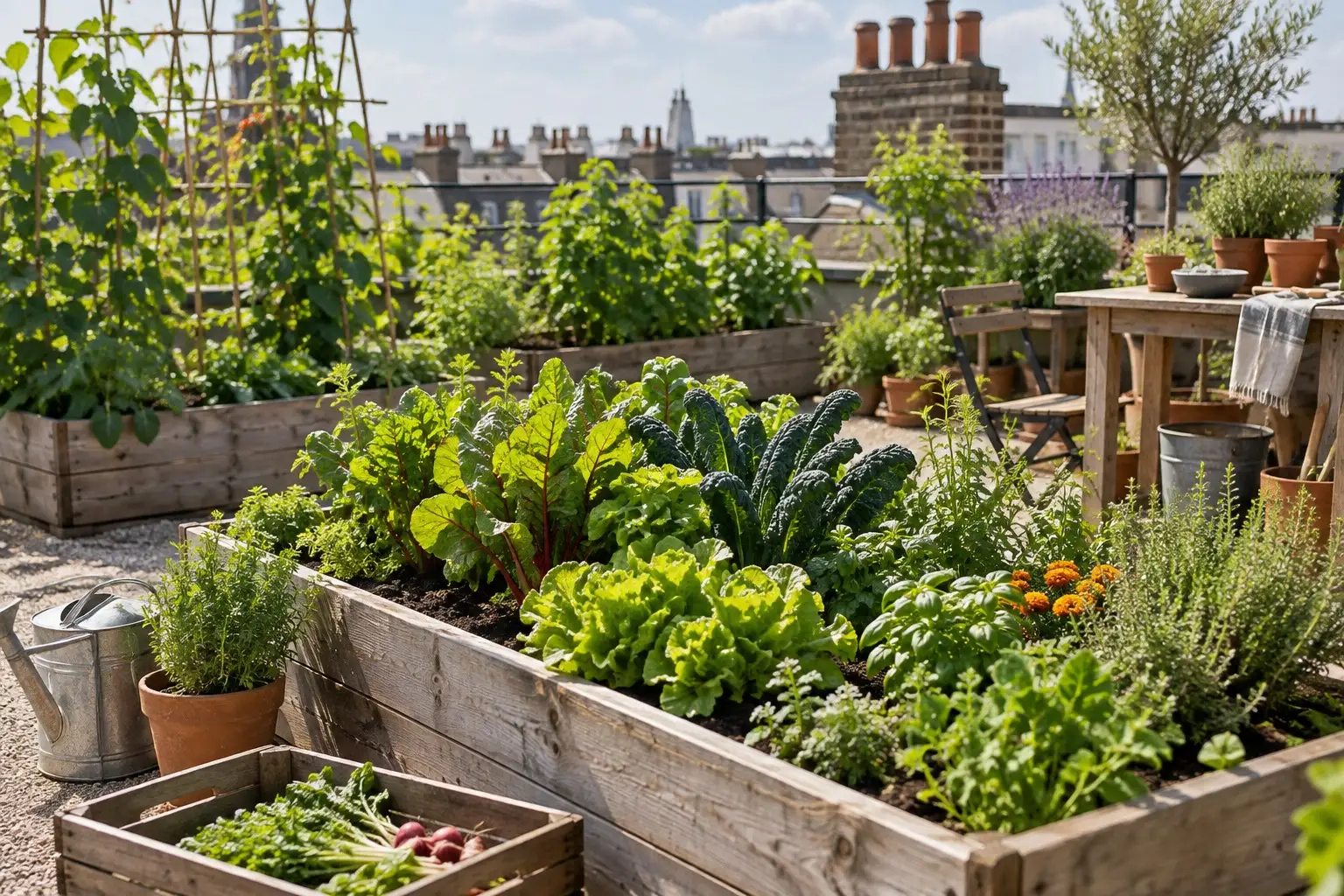
The roof of our building had been empty for as long as anyone could remember: flat, grey and slightly spooky. One spring we decided to make it useful. By midsummer we were eating salad from it. This is how we went about it, in the order that worked.
Ask before you build
The first step isn't a trowel. It's a conversation with whoever owns the building and, if there is one, a structural engineer. A roof is a load-bearing surface with a specific idea of how much it can carry. Wet soil is heavy, and a full container is heavier than it looks. We asked our landlord, who asked a professional, who told us where to put the weight (over the walls, not the middle) and where not to.
Check access too. Is there a safe way up? Is there a rail or a parapet? Where does the water drain? We sketched all of this on paper before we bought a single plant.
Watch the light
For one week, I climbed up at nine, noon and four with a notebook and wrote down where the shade fell. The chimney stack threw a long shadow across the west side. The north-east corner got morning sun and nothing else. We put the greedy crops, tomatoes and courgettes, in the sunniest stretch, and the leafy things in the partial shade.
Wind is the second thing to notice. A rooftop is breezier than it feels from below. We anchored containers to the parapet with simple ties and used windbreaks of reclaimed slats.
The build
Containers and soil
We built raised boxes from salvaged timber, lined with a breathable fabric. A few friends donated old buckets, a bath and a wine crate. Anything that drains and isn't toxic will do. Drill holes in the bottom, and put a layer of coarse material under the soil so water can leave.
For the soil, use a light mix of compost and something airy. Don't fill containers with garden dirt: it packs down and drowns the roots. We got our compost from a local scheme and mixed in some of our own.
Planting and watering
We started with the easy, forgiving things:
Salad leaves and radishes, for quick wins
Herbs: chives, mint (in its own pot, always), parsley
Beans on a simple string frame
Tomatoes, once we trusted ourselves
Water is the real job. Containers dry out quickly in summer, so we set up a collection barrel on the lower roof and a rota on a whiteboard in the stairwell. Mulch helps. So does watering in the morning, before the sun gets serious.
The two mistakes
We underestimated the wind and lost a row of seedlings the first week. And we put the compost bin too close to the stairwell door, which taught us a great deal about neighbours' sense of smell. Both were fixable, and nobody's holding it against us.
What it gave back
The best part wasn't the harvest, though the harvest was lovely. It was the roof becoming a place. By July people were bringing chairs up on Friday evenings. Someone put out a string of lights. Someone else brought a guitar that nobody asked for and nobody minded.
A roof that was wasted space became a small, green room above the street. If you've got one, ask the question. You might be surprised by the answer.
No comments yet
Comments are open. Have a thought or a question? Share it below.