seeds · Sep 14, 2026
Learning to Save Seeds, One Bean at a Time
Our seed swap started with a shoebox and a bean nobody could name. A beginner's account of drying, labelling and passing on what grows well on our street.
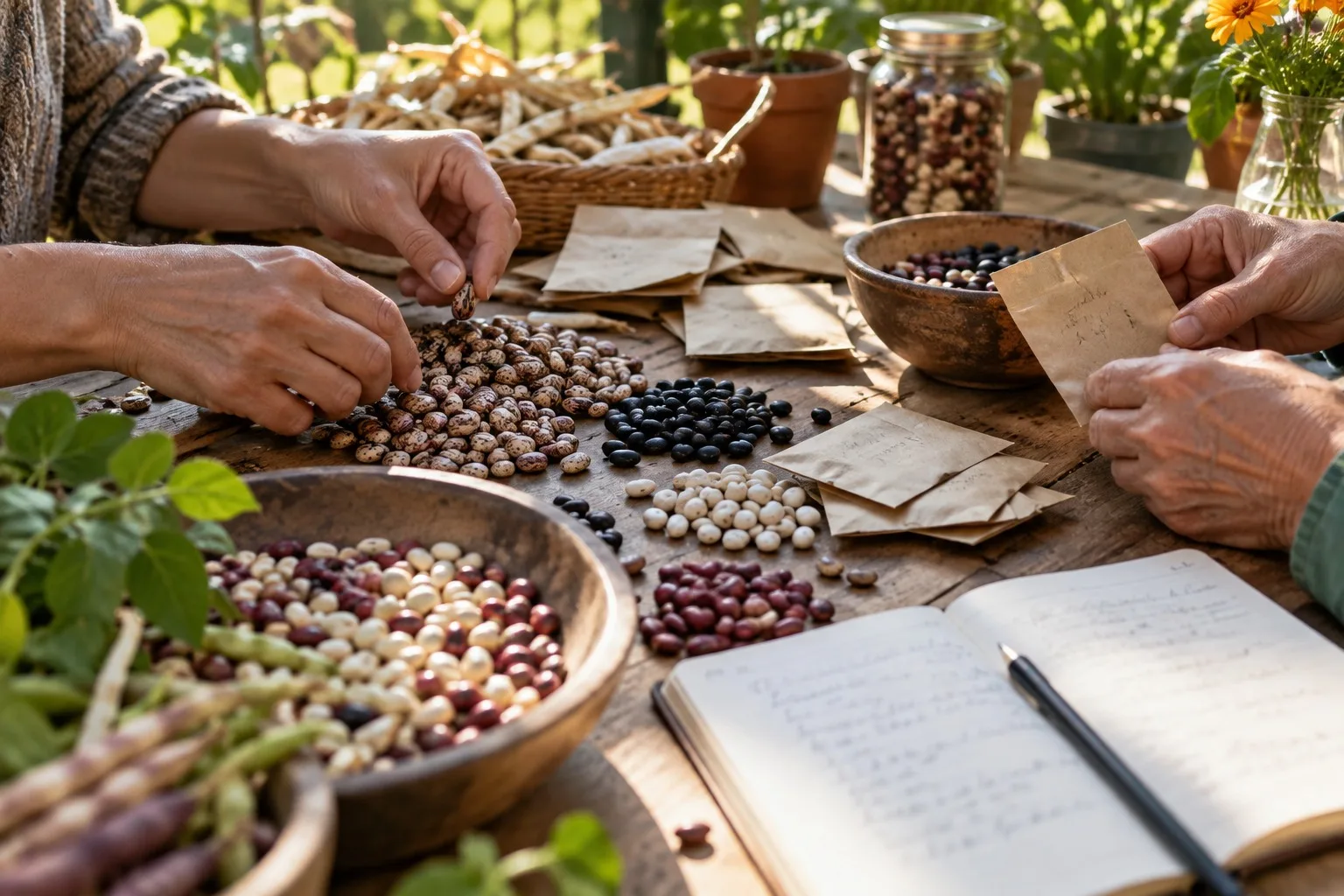
It began with a shoebox. A neighbour, Florentine Adair, arrived at the tool library one morning last autumn with a bundle of small paper envelopes, each labelled in pencil and each containing something dry and rattly. "Beans," she said. "My grandmother's. Nobody knows what they're called."
We've been saving seeds ever since. I'm still a beginner, which is exactly why I'm writing this down.
Start with something forgiving
If you're new to it, begin with beans. They're easy. Let a few pods stay on the plant at the end of the season, until they've dried and rattle when you shake them. Then pick them, shell them, and lay the beans out on a plate. In my experience that's about as hard as it gets.
Lettuce is the second most forgiving, though you have to let it bolt, which feels like a crime against salad. Tomatoes take a bit more fuss because the seeds need rinsing and drying. Start with the beans. The others can wait for next year.
Dry, then dry some more
The enemy is damp. A seed stored while it's still slightly moist will go mouldy and be useless by spring. I leave mine on a plate in a warm, airy room for a couple of weeks, turning them now and then, and I judge by touch. A properly dry bean is hard and a little glassy. If it dents when you press it with a fingernail, give it more time.
I store them in paper envelopes inside a jar with a lid. Paper breathes. The jar keeps out mice. The whole arrangement sits on a shelf in the coolest cupboard I own.
Label like you'll forget
You will forget. I've had three unlabelled envelopes in a drawer for a year, and I couldn't tell you whether they're sweetpeas, nasturtiums or something I picked up on a walk. Write the plant, the year, and a few words about the plant itself: where it grew, how tall, how it tasted.
Those notes are the real treasure. A seed is one thing, but a seed with a story can be passed on.
The swap
Last month we held our first seed swap in the garage. People came with envelopes and went home with different ones. A man who'd never grown anything left with a packet of runner beans and a look of cautious optimism. Florentine's mystery beans were the surprise hit of the day. Eleven people took a few, and one woman insisted on calling them Grandmother's after the woman who gave them to us.
We set a few simple rules:
Label everything with a date
Take what you'll actually plant
Bring back some of what you grow
Tell us what worked and what didn't
A small act
Saving a seed feels like a very small thing. But there's something quietly hopeful in it. You hold a thing that holds the possibility of an entire plant, and you pass it on. Next year, someone on this street will pick a bean off a vine and not know that it started in a shoebox.
I like that. I like that it doesn't need to be explained. Pick a bean, dry it well, and give it to a neighbour.
No comments yet
Comments are open. Have a thought or a question? Share it below.