energy · Sep 22, 2026
Planning a Shared Battery for Our Street
A shared battery in the old bike shed is still only a plan. What we're asking, who we've asked, and why we've decided not to put a single number on the table yet.
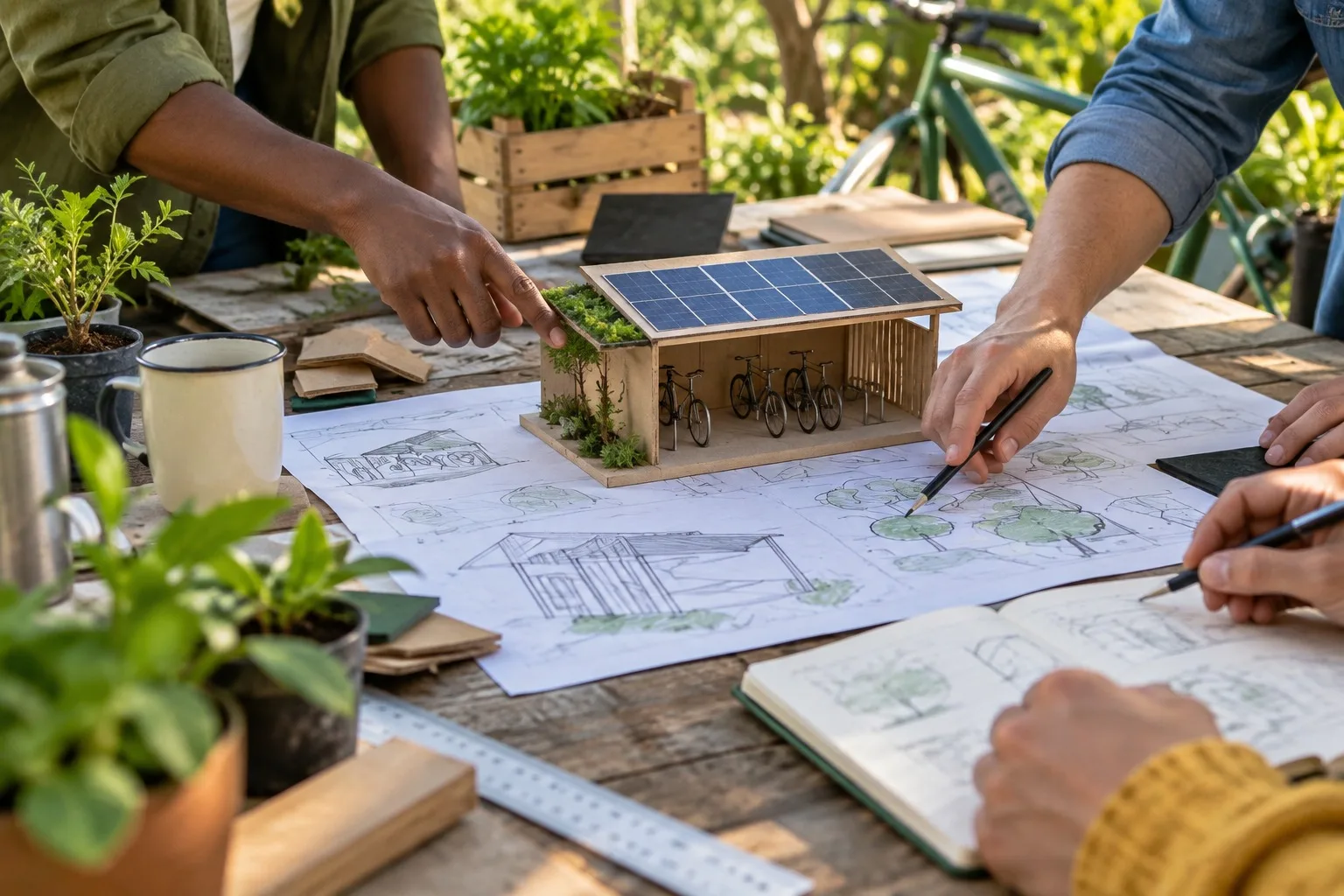
Let me be clear before I begin: we haven't built anything. This post is about planning a shared battery for Linden Row, in the old bike shed behind the community centre. It's a conversation, not a result.
I'm writing it down because I think the conversation is the interesting bit.
The idea in a paragraph
Several houses on our street have panels on their roofs. In the middle of a sunny afternoon, those houses make more than they use. The extra goes back to the grid. We're wondering whether a battery in the shed could hold some of it, and share it out in the evening, to the people on the street who would otherwise be cooking their dinner on a cold grid.
That's all. It's a small idea with a lot of questions attached.
The questions
We keep a list on a whiteboard in the tool library. At the last count it had thirty-one lines. The ones that matter most are these:
Is the shed safe for something like this?
Who inspects it, and who is allowed to switch it on?
What happens if one household leaves the scheme?
Who owns the thing, and who's responsible if it fails?
Does the local network operator need to approve it?
What are the fire and insurance rules?
Notice that none of those are about money. They're about trust and responsibility, which are harder to settle than a spreadsheet.
People we've asked
Ansel Brightwater, our retired electrician, said straight away that he'd help us read the plans but wouldn't sign anything off himself. "Get a licensed person who does this for a living," he told us. We've since asked for a visit from an installer who works with community projects, and we're waiting to hear back.
Marguerite Oyelaran, who sits on the community centre committee, asked a very good question at the first meeting. "What happens in ten years when nobody who started this still lives here?" We don't have an answer. We wrote it on the whiteboard anyway.
Why no numbers
I've been asked more than once what it will cost and how long it will take to pay back. I'm leaving that out of this post on purpose. Any figure I wrote today would be a guess dressed as a fact. Prices change, rules change, and the honest answer depends on a site survey we haven't had.
There is a deeper reason too. If the whole case rests on payback, the case is fragile. If it rests on a street that wants to look after itself a bit better, it's sturdier. I'd like us to decide on that basis, and bring the money in afterwards.
What happens next
Over the next few months we'll:
Get the shed assessed by a qualified person
Talk to the neighbours who aren't convinced
Write down the rules before anything is bought
Share every step here, including the dead ends
I don't know whether it will happen. I do know the meetings have been good. Neighbours who'd barely said hello have sat down together over tea and argued about voltage, and that's a kind of infrastructure too.
If you're planning something similar, I'd love to hear what you've learned. And if you think it's a bad idea, tell us why. We'd rather find out now.
No comments yet
Comments are open. Have a thought or a question? Share it below.